
One might expect that Quality Assurance and Quality Control are just synonyms, and this assumption would be totally wrong. The truth is that while these two concepts do complement each other in many ways, they still serve very different goals. You must understand how they function within the quality control system to maximize its efficiency and effectiveness.
Quality Assurance is one's first step into building a good quality management process. With its help, you will be able to eliminate defects right at the planning stage by introducing effective and reasonable process management techniques. Meanwhile, Quality Control takes place once a defect manages to get past all your precautions, and it helps you find it, define, and eventually correct.
Both processes should be used together since they complement each other like QA vs TA and provide excellent grounds for creating an effective quality management framework. What is even better, you are not limited when using them, these approaches are helpful in almost all industries and domains of activity.
What Is Quality Assurance (QA)?
Quality Assurance refers to a process-oriented strategy that involves applying appropriate methodologies, standards, and procedures to prevent defects in the output.
QA is primarily a preventive strategy that involves making changes in the processes of creating the output. QA ensures that the system design is optimized to minimize error rates.
Quality Assurance is implemented before or during the process of developing or producing an output.
Key characteristics of QA:
- Process-oriented strategy
- Proactive and preventive
- Continuous improvement orientation
- Collective responsibility
Typical QA activities:
- Setting up quality frameworks and standards
- Creating process documentation
- Creating process documentation
- Conducting audits and evaluations
- Implementing industry best practices
According to IBM, fixing a defect after release can cost up to 15 times more than addressing it during the development phase.
What Is Quality Control (QC)?
Quality Control is a product-centered approach aimed at guaranteeing that the end deliverables will satisfy pre-established quality criteria through inspection and testing.
It is a correction-based approach that concentrates on detecting flaws in the final output. It guarantees that the product meets the expectations of its customers before delivery.
Also, it usually occurs after the manufacturing process is complete or during the product development process.
Key characteristics of QC:
- A product-centered approach
- Correction-based and reactive in nature
- Flaw detection is the core focus
- Normally managed by testing/inspection teams
Typical QC activities:
- Testing and validating the product
- Inspecting and auditing the product
- Detecting and reporting flaws
- Regression testing
- Validating the final product
According to The National Institute of Standards and Technology (NIST), billions of dollars are lost due to software errors each year globally.
Difference Between Quality Assurance and Quality Control
When you understand QA vs QC, you can build a more balanced and effective quality strategy for your organization.
Key Conceptual Differences
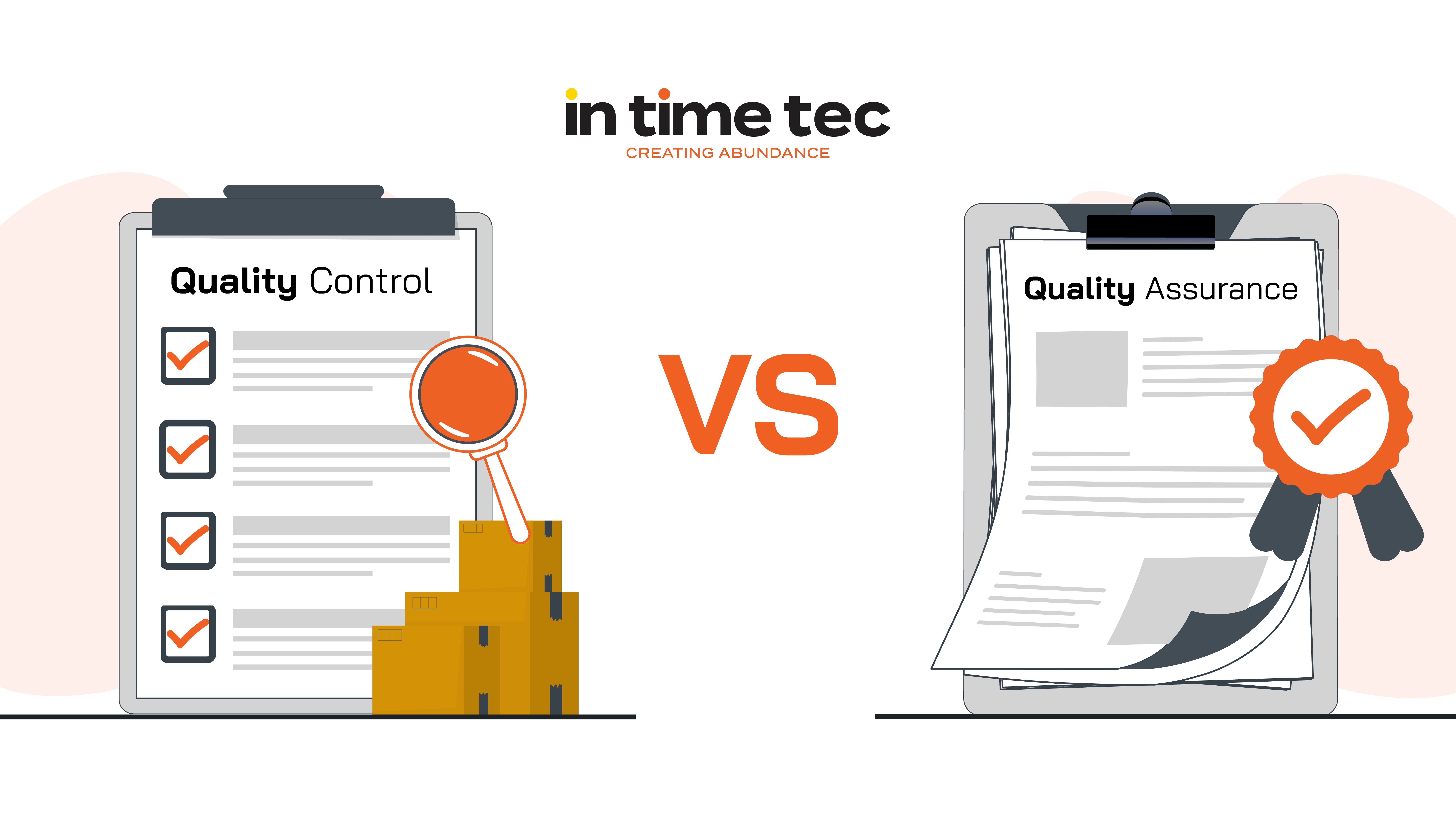
- QA focuses on improving processes, while QC focuses on evaluating the final product.
- One follows a preventive approach, whereas the other is corrective in nature.
- It is proactive and aims to avoid defects, while the other is reactive and identifies defects after they occur.
- QA involves the entire team, while QC is usually handled by dedicated testing or inspection teams.
- QA is applied before and during production, while QC is applied after production or during final stages.
QA vs QC Comparison Table
Before diving in, here’s a quick QA vs QC comparison to help you clearly understand how both contribute to delivering quality.
|
Parameter |
Quality Assurance (QA) |
Quality Control (QC) |
|
Objective |
Prevent defects |
Identify and fix defects |
|
Focus Area |
Process |
Product |
|
Approach |
Proactive |
Reactive |
|
Activities |
Audits, standards, documentation |
Testing, inspection, validation |
|
Timing |
Before and during production |
After production |
|
Ownership |
Entire team |
Testing or inspection team |
|
Outcome |
Improved and consistent processes |
Verified product quality |
Benefits and Challenges of QA and QC
While both QA and QC have many advantages, there are also some drawbacks associated with their use.
Benefits of Quality Assurance:
Here are the advantages associated with implementing Quality Assurance:
- The ability to catch problems while they are still small enough to be resolved without major consequences in the future.
- Create unity within your operations so that your processes are always carried out according to a consistent, reliable standard.
- Compliance with all necessary regulations so that everything you do maintains quality and satisfies stakeholders.
- Savings in expenses since it is much cheaper to develop good processes than deal with problems later.
Challenges of Quality Assurance:
Quality Assurance is, of course, associated with certain difficulties as well:
- Attention needs to be paid at all times, and consistent supervision is absolutely essential.
- Initial investments cannot be avoided since developing an effective system takes both time and effort.
- Resistance from the team is quite common and may prove challenging to overcome.
Benefits of Quality Control:
And now here is why Quality Control benefits you:
- Being able to catch defects as soon as they happen allows identifying potential problems right away.
- The guarantee that deliverables will meet all standards and reflect the expected quality.
- Final check and protection against any unforeseen complications.
Challenges Associated with Quality Control:
However, there are some challenges in implementing QC that are important to note:
- Reactivity as an inherent characteristic implying that the issues can only be dealt with after they have happened rather than preventing their occurrence.
- Initial defects can never be corrected, as problems in the initial stages of manufacturing cannot be prevented through QC alone.
- The further the defect has developed without being detected, the more costly its correction will be.
Real-world Examples of QA vs QC across Industries
To further illustrate the key differences between software quality assurance vs quality control, consider examples of how these practices operate in different industries:
Software Industry:
- QA process includes the implementation of coding guidelines, test strategy development, and implementation of a robust development infrastructure that allows for improving code in the process.
- QC process is applied throughout functional testing, regression testing, and defect confirmation, ensuring that the software works as intended prior to the release.
Construction Industry:
- QA practice implies implementation of material guidelines, the development of a quality management plan, and the adherence to regulations to ensure quality performance of all processes.
- QC practice includes conducting inspections at the construction site, performing structural tests, etc.
Healthcare Industry:
QA process involves the formulation of clinical guidelines and standards for documentation and compliance, ensuring a system that safeguards both the patients and the organization.
On the other hand, the QC process involves auditing, checking of equipment, and the evaluation of patient outcomes, ensuring that quality care is provided.
It has been estimated by the World Health Organization (WHO) that substandard care causes injury to 1 in 10 people globally, emphasizing how important quality assurance/quality control processes are.
Future Scope of Quality Assurance and Quality Control
QA and QC functions are constantly developing with the advent of technological changes. Companies nowadays tend to employ innovative methods to keep their quality standards up to date.
The most prominent trends include artificial intelligence and automation of testing procedures, implementing shift-left principles with early-stage testing. It also applies predictive analytics to detect possible defects prior to manufacturing.
Quality management is gaining more significance in highly regulated industries, such as pharmaceuticals or aerospace, where reliability and compliance are vital factors. With the ongoing digital transformation, QA and QC will continue to play pivotal roles in business operations.
Conclusion
Even though QA and QC are not the same, they work together to make sure you avoid defects and achieve the desired quality when you finish making the product.
FAQS
Q1. What is the meaning of Quality Control?
The definition of Quality Control is a series of activities aimed at evaluating and testing the product for its compliance with set standards.
Q2. What is the meaning of Quality Assurance?
Quality Assurance involves the use of process-oriented methods to identify the potential risks associated with defects and eliminate them from the production cycle.
Q3. What is Quality Assurance in Software Testing?
Quality assurance is the practice of ensuring adherence to a set of defined practices that regulate software development processes and testing.
Q4. How to ensure Quality Control on a Construction Site?
Quality control on a construction site requires frequent inspections, testing the strength of structures, keeping accurate records, and meeting safety standards.
Q5. What is Quality Assurance in Healthcare?
Quality Assurance in the healthcare industry entails following established medical practices and guidelines and delivering high-quality care.
Q6. What is the difference between Quality Assurance and Quality Control?
Quality Assurance entails working on process improvements and eliminating risks while Quality Control identifies and eliminates defects.
Like what you see? Share with a friend:


.jpg?width=352&name=Guide%20on%20Quality%20Assurance%20(QA).jpg)